
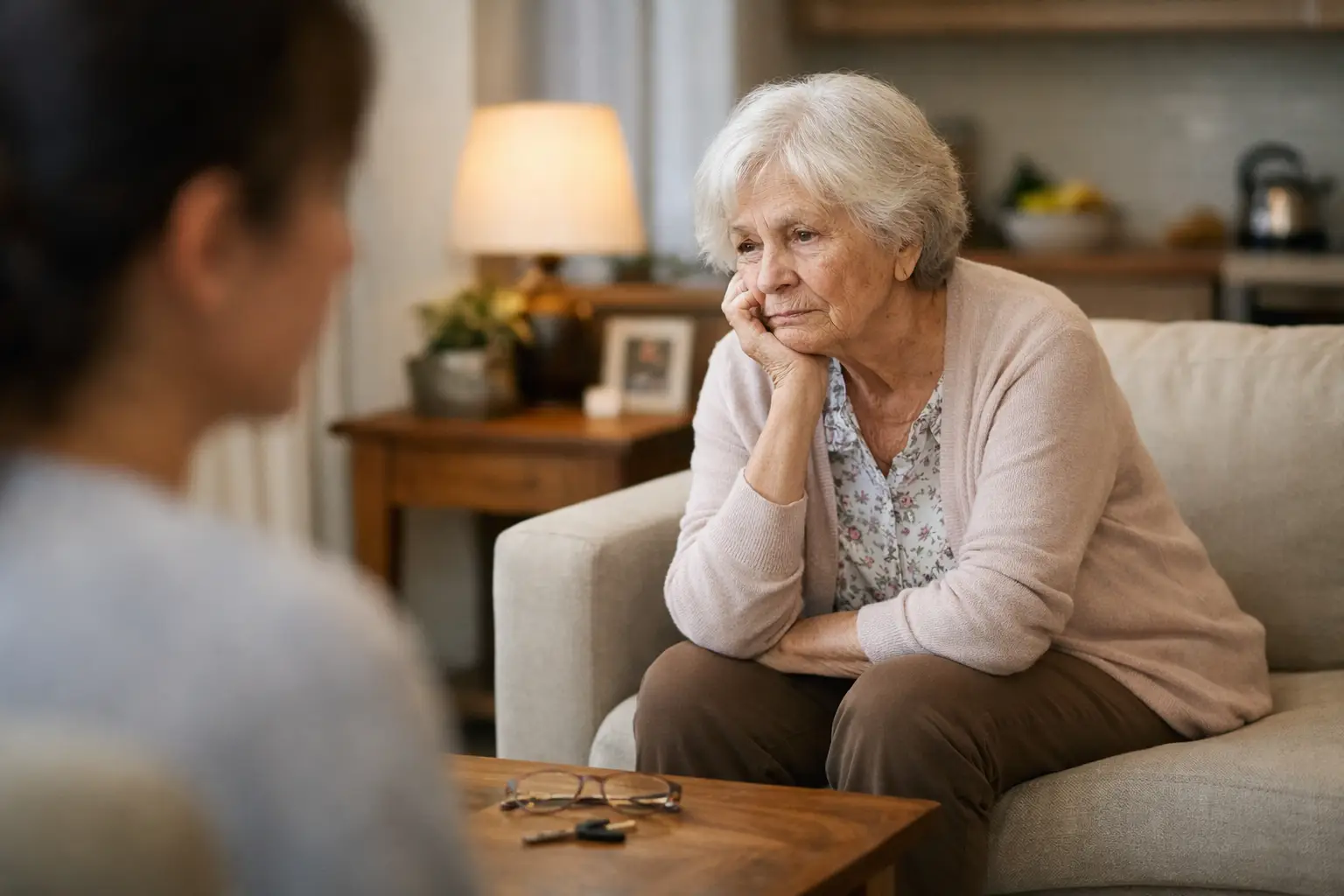
One missed stove burner, one unpaid bill, or one confused walk outside at night can change everything. If you are asking when should dementia patients stop living alone, the real question is usually this: has the risk at home become greater than the comfort of staying there?
For many families, that answer does not arrive all at once. Dementia often progresses in uneven steps. A parent may seem fine during a short phone call but struggle for hours with medications, meals, hygiene, or getting through the day safely. That is why this decision is so hard. It is rarely about one diagnosis. It is about whether a person can still live alone without daily danger, growing confusion, or unmet care needs.
When should dementia patients stop living alone?
The safest answer is this: a person with dementia should stop living alone when memory loss begins to interfere with judgment, safety, personal care, or the ability to respond to an emergency. That point can come early for some people and later for others, depending on the type of dementia, how fast symptoms progress, physical health, and the amount of support available.
A person does not need to be in the late stages of dementia to be unsafe alone. In fact, some of the greatest risks appear in the middle stages, when someone is physically able to move around and attempt daily tasks, but no longer able to do them consistently or safely. They may still insist they are independent. They may even sound convincing. Families often discover the truth in small but serious breakdowns – spoiled food in the refrigerator, missed medications, repeated falls, wandering, or stacks of overdue notices.
The key issue is not whether your loved one can do something once. It is whether they can do it reliably, every day, without supervision.
Signs dementia patients should stop living alone
Some warning signs are obvious. Others are easy to explain away until a crisis happens. If several of these issues are present, living alone is usually no longer safe.
Safety problems at home
Safety concerns are often the clearest turning point. A person may leave the stove on, forget that water is running, misuse appliances, or become confused about how to lock the door. Some people start wandering, especially in the evening or at night. Others let strangers into the home because they can no longer judge who is safe.
Falls also matter. Dementia affects attention, balance, and reaction time. If someone falls and lives alone, even a minor injury can become dangerous if no one is there to help.
Missed medications and medical needs
Medication mistakes are common and serious. A person may forget doses, take extra doses, mix up bottles, or stop medications entirely because they no longer understand what they are for. This is especially risky for people with diabetes, heart disease, high blood pressure, or other chronic conditions.
If a loved one is skipping doctor appointments, forgetting recent medical instructions, or unable to explain symptoms clearly, living alone may no longer provide enough support.
Poor nutrition, dehydration, and weight loss
Many people with dementia stop eating properly long before families realize it. They may forget to prepare meals, lose interest in food, eat only sweets or snack foods, or become unable to use the kitchen safely. Dehydration is also common and can worsen confusion quickly.
A noticeable weight loss, an empty refrigerator, expired food, or repeated takeout containers can tell you more than a conversation ever will.
Hygiene and self-care decline
Changes in bathing, grooming, laundry, and clothing are often strong indicators that daily living has become too hard to manage alone. Someone may wear the same clothes for days, forget to bathe, stop brushing teeth, or struggle with toileting. Incontinence can add another layer of risk, especially if the person cannot clean themselves properly or change clothing without help.
These are not minor quality-of-life issues. They are signs that the person needs regular hands-on support.
Confusion, paranoia, or poor judgment
When dementia affects judgment, the risks grow quickly. A person may believe someone is stealing from them, accuse neighbors of strange things, or make unsafe decisions with money. They may answer scam calls, give away personal information, or become fearful and agitated when nobody is there to reassure them.
Even if they are not physically frail, impaired judgment alone can make living alone unsafe.
Caregiver supervision has become constant
Sometimes the clearest answer comes from what the family is already doing. If relatives are calling several times a day, dropping by constantly, managing meals, paying bills, checking medications, and worrying through the night, the person is not really living independently anymore. They are living alone between rescue visits.
That arrangement is hard to sustain and often breaks down after a hospitalization, a fall, or caregiver burnout.
Why this decision is often delayed
Families delay this step for understandable reasons. A loved one may beg to stay home. A spouse may feel guilty. Adult children may worry they are moving too soon. There is also a common belief that as long as someone recognizes family members or can hold a conversation, they can continue living alone.
But dementia does not work that way. A person can sound socially appropriate and still be unable to manage a full day safely. They may hide problems, repeat practiced answers, or become defensive when asked direct questions. Short visits can miss what happens in the evenings, overnight, or in quiet moments when no one is prompting them.
Waiting for absolute proof can be risky. The first undeniable sign is sometimes a dangerous event – wandering outdoors, medication overdose, kitchen fire, or an ER visit after a fall.
How to assess whether living alone is still safe
Start with patterns, not promises. Look at what your loved one is actually able to do over time. Can they manage meals, medications, hygiene, mobility, and emergencies without help? Is the home clean and reasonably safe? Are bills paid? Are there repeated calls about confusion, lost items, or fear?
It helps to gather input from multiple people. Family members, neighbors, home care aides, and physicians often each see a different part of the picture. One person may notice wandering. Another may see weight loss. A doctor may recognize cognitive decline that the family has normalized.
Try to separate preference from capacity. Most people would prefer to remain at home. The harder question is whether they still have the ability to do that safely.
Is there ever a middle ground?
Sometimes, yes. In the earlier stages, increased support at home may work for a period of time. That can include family oversight, private caregivers, medication management, meal support, and home safety changes. For some families, this buys meaningful time.
Still, there are trade-offs. Home care can become expensive, especially if supervision is needed for many hours a day or overnight. Coverage may be inconsistent. A house may remain isolating even with help coming in. And as dementia progresses, gaps in supervision become more dangerous.
That is why many families eventually look for a setting with structure, routine, secure supervision, and staff who understand memory loss. Specialized memory care is not simply a housing change. It is often the point where safety, dignity, and quality of life are better protected than they can be at home alone.
What families should look for next
If your loved one is no longer safe living alone, the next step should match their level of need. Traditional assisted living may not be enough if the person has significant confusion, wandering risk, poor judgment, or needs hands-on support throughout the day. In those cases, a specialized memory care setting with 24-hour supervision can be a better fit.
Families in Central Massachusetts often feel pulled between two imperfect options – assisted living that does not provide enough dementia-specific support, or a nursing home that feels more clinical than necessary. A specialized memory care residence can offer a middle ground, with stronger supervision, a secure environment, help with daily living, and a more home-like setting.
This is also the time to ask practical questions. How is nighttime supervision handled? What happens if a resident becomes more confused? Is there nursing oversight? Are activities structured for cognitive impairment? Are costs predictable, or do fees increase as needs change? Clear answers matter.
The emotional side of making the move
Even when the choice is clearly right, it can still feel painful. Many families feel they are taking something away. In reality, they are often giving something back – regular meals, medication support, social connection, safety, and relief from the stress of trying to manage alone.
A good care setting should not only reduce risk. It should make daily life calmer and more manageable. That matters for the person with dementia, and it matters for the family who wants to return to being a daughter, son, or spouse instead of a full-time crisis manager.
At some point, the kindest decision is not asking whether a loved one can keep living alone a little longer. It is asking where they will be safest, most supported, and treated with the dignity they deserve every day.