
A fall, a hospital stay, a wandering incident, or another sleepless night can quickly bring nursing homes into a family conversation. For adult children and spouses caring for someone with Alzheimer’s disease or another form of dementia, the question is rarely just, “Where can Mom live?” It is, “Where will she be safe, understood, and treated with dignity when we cannot provide enough support at home?”
A nursing home can be the right answer for some older adults. But for a person whose primary challenge is memory loss, it is worth understanding the alternatives before making a decision. Specialized memory care may offer the supervision and structure a loved one needs in a more residential, personal setting – especially when traditional assisted living no longer provides enough support.
What Nursing Homes Are Designed to Provide
Nursing homes, also called skilled nursing facilities, are built to care for people with significant medical and physical needs. They provide around-the-clock nursing care, help with personal care, medication management, meals, and rehabilitation services. Many people enter after surgery, illness, injury, or hospitalization, while others require long-term care because their health needs are complex.
For a loved one who needs frequent skilled treatment, extensive wound care, intravenous medications, ventilator support, or intensive rehabilitation, a nursing home may be the most appropriate setting. The clinical resources available there can be essential.
At the same time, a nursing home is not automatically the best fit simply because a person has dementia. Dementia changes how a person experiences their surroundings. Noise, unfamiliar routines, frequent room changes, and a busy institutional setting can increase confusion or distress for some residents. A family should ask whether the community has a dedicated memory care program, trained staff, a secure environment, and meaningful daily routines for people living with cognitive decline.
When Memory Care May Be a Better Fit
Memory care is designed around the realities of Alzheimer’s disease and related dementias. The strongest programs provide more than a locked door and basic assistance. They create a predictable, secure daily environment where caregivers understand communication changes, repetition, anxiety, sundowning, wandering, and the need for familiar routines.
This level of care can be a good fit when a loved one needs 24-hour supervision but does not require the intensive medical treatment provided by skilled nursing. It may also be appropriate when regular assisted living is no longer enough. A person may be physically able to walk, eat, and participate in activities, yet still be unsafe alone because they forget to take medication, leave the home, become disoriented, or need hands-on support with bathing, dressing, toileting, and meals.
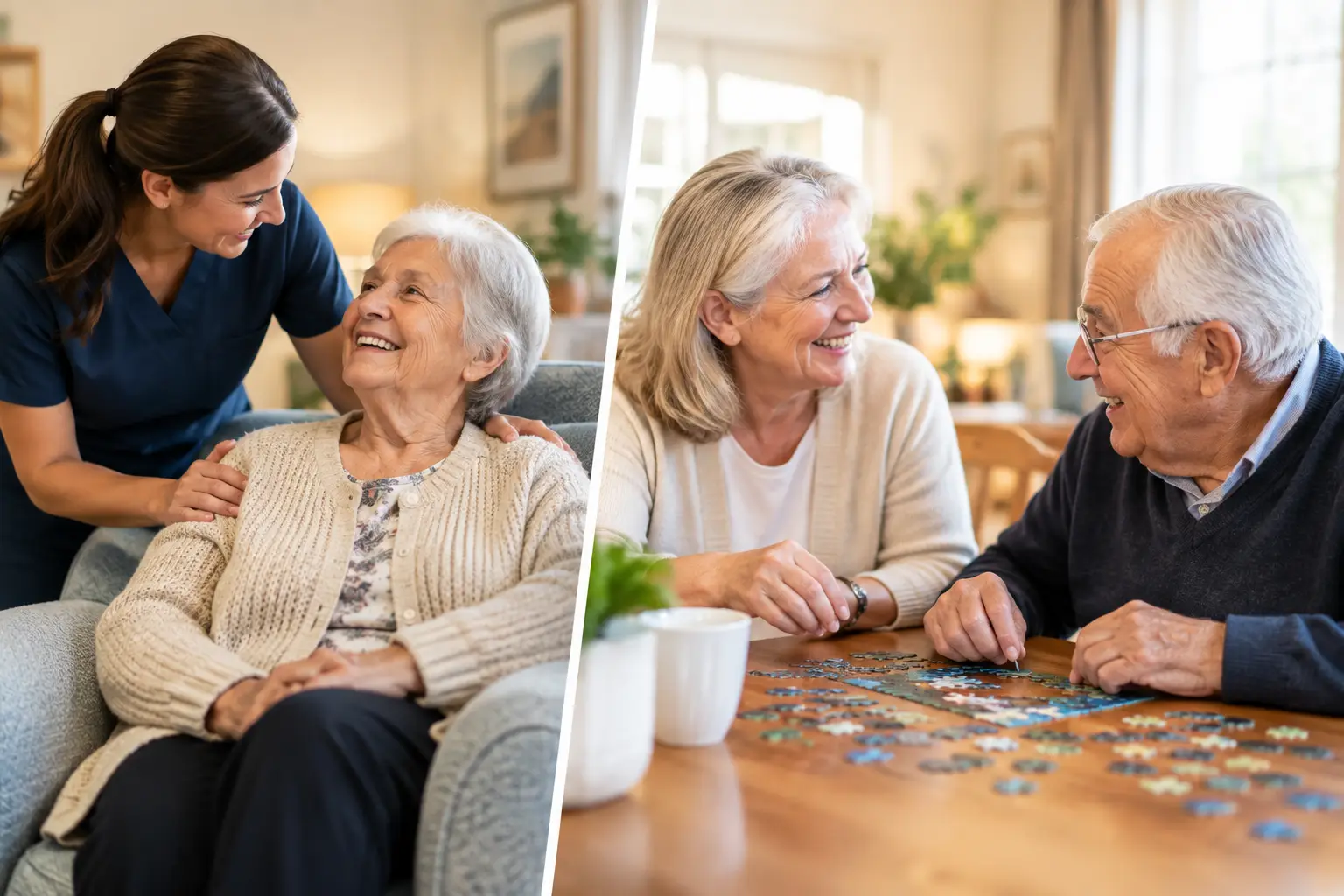
For these residents, the setting matters. A smaller, home-like environment can reduce overwhelm and make it easier for staff to know each person’s preferences, abilities, and changes in condition. Consistent caregiving relationships are especially valuable when verbal communication becomes difficult.
At Oasis at Dodge Park, the care model is designed for this middle ground: a higher level of supervised dementia care than traditional assisted living, without placing every resident in a nursing home environment. The goal is not to minimize a person’s needs. It is to match those needs with the right level of support.
The Real Question: What Does Your Loved One Need Each Day?
Families often search for nursing homes during a crisis, which is understandable. Yet the most useful decision is based on the person’s daily needs, not only on the diagnosis or the urgency of the moment.
Consider how much supervision your loved one needs throughout the day and night. Are they safe if they wake up confused at 2 a.m.? Do they need reminders, cueing, or physical help with personal care? Can they reliably recognize hazards, find the bathroom, eat enough, and take medications as directed? Are behavioral changes making care at home unsafe or exhausting for the family caregiver?
Also consider medical needs separately from memory needs. Someone can have advanced dementia and still not need skilled nursing around the clock. Another person may have moderate memory loss but require nursing home-level care because of serious medical conditions. The right answer depends on the full picture.
Signs that more specialized support may be needed
A move should not wait until every option has disappeared. Families often benefit from exploring care when they notice a pattern of increasing risk, such as:
- Wandering, getting lost, or attempting to leave home alone
- Falls, unsafe use of appliances, missed medications, or poor nutrition
- Increasing confusion, agitation, hallucinations, or nighttime wakefulness
- Needing regular help with bathing, dressing, toileting, or mobility
- Caregiver exhaustion, declining health, or an inability to provide safe supervision
These signs do not mean a family has failed. They often mean the disease has progressed beyond what one household can safely manage.
Questions to Ask Before Choosing a Nursing Home or Memory Care Community
A brochure cannot tell you whether a community can manage your loved one’s difficult days. A visit and direct questions can. Ask who is present overnight, how staff are trained in dementia care, and how the team responds when a resident becomes frightened, resistant to care, or confused.
Ask about nursing oversight and how changes in health are recognized and communicated to families. Find out whether the setting can coordinate physical therapy, occupational therapy, hospice, primary care, and other services when needed. A community should be clear about what it can provide today and what circumstances might require a different level of care later.
Dining deserves attention as well. Dementia can affect appetite, swallowing, attention, and the ability to use utensils. Families should ask how meals are supported, how weight changes are monitored, and whether dietary needs can be accommodated. Activities are equally important. Meaningful engagement is not simply entertainment. Familiar music, conversation, exercise, spiritual services, sensory activities, and purposeful routines can help a resident feel calmer and more connected.
Finally, ask for a complete explanation of costs. Families deserve to understand what is included, what may cost extra, and whether the rate can change after admission. Transparent pricing is not a minor detail when a family is planning for long-term care.
Why a Tour Can Reveal What a Checklist Cannot
During a tour, pay attention to how the space feels and how residents are treated. Are staff members speaking respectfully to residents, even when residents cannot answer? Do people appear engaged, comfortable, and appropriately supported? Is the environment secure without feeling cold or restrictive?
Notice whether the community appears organized but still warm. Memory care should have routines, because routines create reassurance. It should also allow room for individual preferences: a favorite food, a familiar prayer, a preferred bedtime, or a quiet place to sit when the day feels overwhelming.
Bring practical questions from the family. Ask how the team will learn your loved one’s life story, former occupation, habits, triggers, and sources of comfort. Good dementia care begins with seeing the person behind the diagnosis.
Making a Decision Without Waiting for Perfect Certainty
There is no easy moment to move a parent or spouse from home. Guilt is common, even when the decision is clearly driven by love and safety. Many families wait because they promise themselves they will know when the time is right. In reality, the decision often becomes clearer by looking at whether home is still safe, sustainable, and supportive for everyone involved.
Choosing between nursing homes and specialized memory care is not about choosing the most clinical setting or the least expensive setting. It is about choosing care that fits the person’s needs now, with a realistic plan for what may change next. If a loved one needs skilled medical services, a nursing home may provide necessary care. If they need secure, highly supervised dementia support in a more home-like setting, specialized memory care may offer a better path.
A thoughtful tour, honest conversation, and clear understanding of daily needs can replace some of the fear with direction. Your loved one deserves care that protects their safety while continuing to honor the life they have lived.