
A beautiful lobby may make a strong first impression, but it will not keep a loved one safe at 2 a.m. if they wake confused, anxious, or determined to leave. When families compare the top memory care amenities families want, the most meaningful features are rarely decorative extras. They are the daily supports that provide safety, comfort, purpose, and dignity for a person living with Alzheimer’s disease or another form of dementia.
For families in Worcester and Central Massachusetts, the right setting often falls between traditional assisted living and a nursing home. Your loved one may need more than reminders and occasional help, but not hospital-level care. In that situation, amenities should be evaluated as part of the care model, not as a separate checklist.
Top Memory Care Amenities Families Want: Start With Safety
Security is not about making a residence feel restrictive. It is about creating an environment where residents can move about comfortably while families know someone is present, attentive, and prepared to respond.
Twenty-four-hour supervision is one of the most important features to ask about. Dementia does not follow office hours. A person who is settled during the day may become disoriented overnight, need assistance using the bathroom, or experience changes in behavior after dinner. Ask who is awake overnight, how frequently residents are checked, and what happens if someone needs immediate help.
A secure memory care setting should also be designed for people with cognitive impairment. This can include controlled entry and exit points, clear walking paths, good lighting, handrails, and layouts that reduce confusion and fall risk. A locked door alone is not a complete safety plan. Families should look for thoughtful design paired with staff supervision and individualized care routines.
Medication management, assistance with personal care, and a plan for medical concerns matter just as much. Ask whether licensed nursing oversight is available, how changes in condition are communicated, and when a resident may need a higher level of medical attention. A community should be able to explain these answers plainly, without vague promises.
Meaningful Activities Are a Daily Care Need
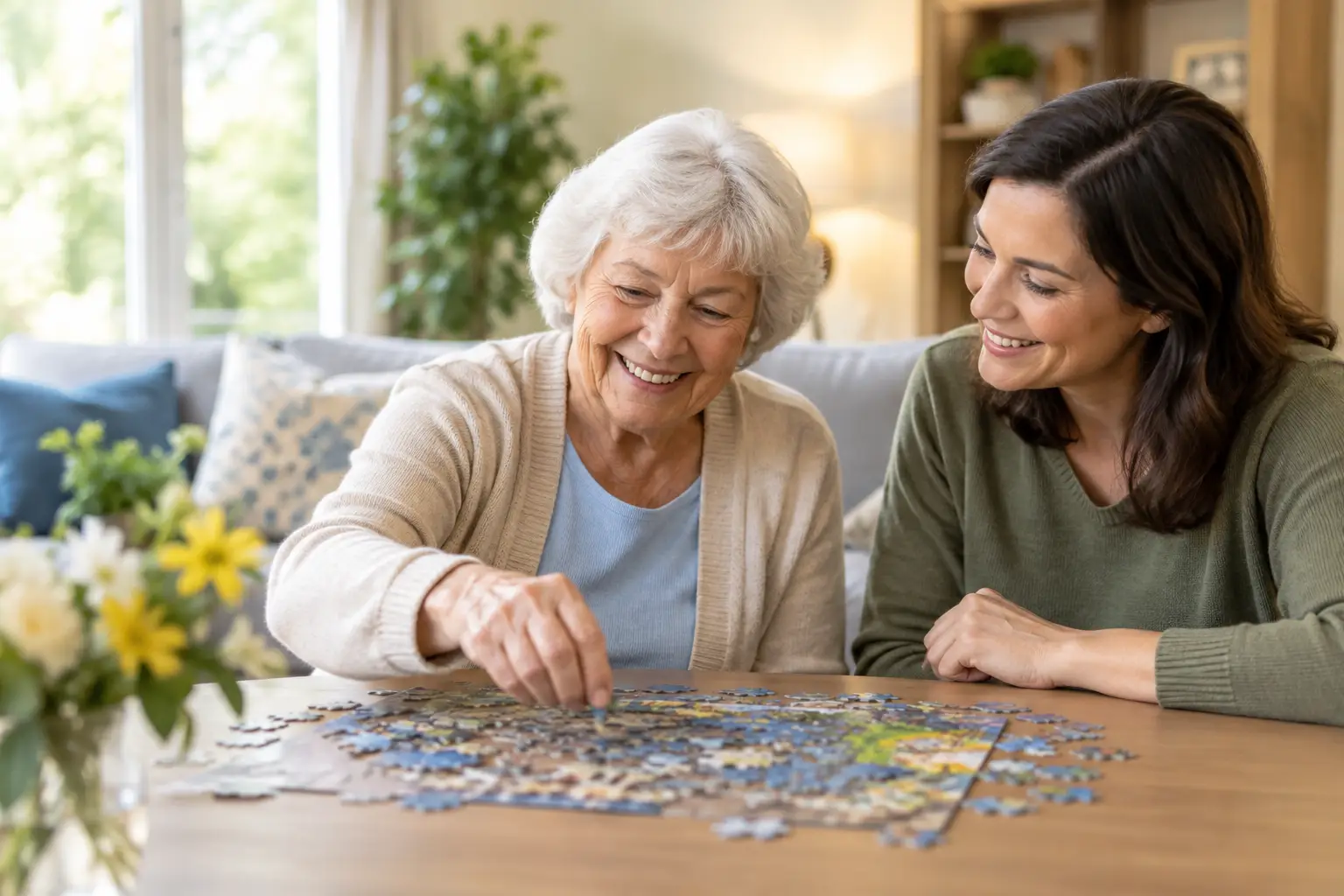
A full activity calendar can look impressive, but the real question is whether residents can and do participate. For someone with memory loss, meaningful engagement is not simply entertainment. It can reduce isolation, encourage movement, create familiar moments, and support a sense of identity.
The strongest programs offer structured activities throughout the day, with choices suited to different abilities and interests. Music, gentle exercise, baking, gardening, discussion groups, games, religious services, and familiar household tasks can all be valuable when they are adapted to the individual. A former teacher may enjoy reading with others. A lifelong homemaker may find comfort in folding towels or helping set a table. A resident who no longer follows a group conversation may still respond warmly to a favorite song.
Ask to see activities in progress during a tour. Observe whether staff members are inviting residents into the moment and adjusting when someone becomes tired, frustrated, or withdrawn. A quiet resident does not necessarily mean an unhappy resident, but a room full of people sitting unattended is worth noticing.
Dining That Supports Health and Familiarity
Mealtimes are central to daily life in memory care. They provide nutrition, routine, social contact, and often one of the most comforting parts of the day. Yet dementia can affect appetite, taste, swallowing, attention, and the ability to use utensils independently.
Families should look for home-style dining with staff support when needed. Meals should be appealing, easy to recognize, and served in a calm setting that does not overwhelm residents. Individual dietary needs should be taken seriously, including diabetes management, heart-healthy choices, food allergies, texture modifications, and unplanned weight loss.
Dietitian support is an added advantage, particularly when a loved one’s eating habits have changed. Ask how the community monitors nutrition and hydration, how often menus change, and whether family members are informed if a resident begins skipping meals. It is also helpful to ask whether residents can receive assistance with eating in a respectful, unrushed way.
A dining room does not need to resemble a restaurant to be excellent. It should feel welcoming, well supervised, and responsive to the needs of the people at the table.
Personal Care Preserves Dignity
Many families begin considering residential memory care after personal care at home becomes difficult. Bathing, dressing, toileting, grooming, mobility, and continence care can become challenging for both the person with dementia and the family caregiver. These tasks require time, patience, and skill, especially when a loved one is embarrassed, resistant, or fearful.
The right community provides assistance without treating residents like tasks to be completed. Look for caregivers who speak calmly, explain what they are doing, and allow time for a resident to make small choices. Choosing between two shirts, participating in grooming, or maintaining a familiar morning routine can help preserve independence and self-respect.
Salon services may sound like a small amenity, but they can have real value. A haircut, shave, or manicure can support personal identity and help a resident feel more like themselves. The same is true of clean, comfortable clothing and attentive grooming. These details are often visible signs of the quality of everyday care.
Family Communication Is an Amenity You Cannot See
When a parent or spouse moves into memory care, families need reassurance without having to call repeatedly for basic information. Regular communication is one of the amenities families value most because it builds trust over time.
Ask how the team shares updates about health changes, behavior, falls, appointments, medications, and care plan adjustments. Find out who your primary contact will be and how quickly calls are returned. A good community welcomes appropriate family involvement and recognizes that relatives often know a resident’s history, preferences, and triggers better than anyone.
Family education and caregiver support groups can also make a difficult transition less isolating. Dementia changes relationships, and even families who are confident in their decision may experience guilt, grief, or uncertainty. Guidance from experienced memory care professionals can help families understand what they are seeing and remain meaningfully connected to their loved one.
Look Beyond the Amenity List During a Tour
Some amenities are easy to compare on paper: private or shared rooms, outdoor space, salon services, religious programs, therapy access, and transportation. Others require careful observation. The way caregivers greet residents, redirect confusion, and respond to distress will tell you more than a brochure ever can.
During a visit, notice whether the residence feels calm and home-like, not overly institutional. Look at resident rooms and common areas. Are people clean, appropriately dressed, and engaged at their own pace? Do staff members appear to know residents personally? Are there enough team members present to assist people without rushing?
It is also reasonable to ask practical questions about cost. A lower monthly rate can become less affordable if personal care, medication management, nursing services, or other essential supports carry additional fees. Families deserve clear information about what is included, what may change as needs increase, and whether rates are predictable after admission.
The Best Amenity Is Care That Fits Your Loved One
No two people experience dementia in exactly the same way. One person may need frequent reassurance and help with mobility. Another may be physically active but unable to recognize hazards or remember where they are. The best memory care community is not the one with the longest list of features. It is the one whose supervision, clinical oversight, routines, and personal attention match your loved one’s current needs while allowing room for those needs to change.
As you visit communities, trust both the questions you ask and what you observe. Your loved one deserves a place where safety is constant, daily life has purpose, and care is delivered with the patience and respect that memory loss never takes away.